Introduction
Within the high-stakes ecosystem of upstream oil and gas operations, organizational agilities are heavily dictated by the latency and structural integrity of field-derived telemetry. As exploration architectures scale, the exponential volume of data points coming from dynamic well assets, processing complexes, and terminal custody-transfer infrastructure demands a cohesive processing framework. Conventional, localized data silos no longer suffice; the modern digital oilfield requires an architectural single source of truth capable of standardizing multi-tiered operational parameters into instantaneous, executive-level visibility.
The Production Data Monitoring System (PDMS) stands as a definitive, centralized web platform custom-engineered to optimize and secure the data lifecycles across Husky CNOOC Madura Limited (HCML) assets, specifically targeting the HCML, BD, and 3M operational sectors. This enterprise application brings structural unification to distributed operational data entry workflows, real-time performance tracking via interactive dashboards, and automated compliance reporting within a unified, web-accessible framework.
Challenge
The multi-field operational footprint of upstream oil and gas enterprises yields an incredibly dense matrix of variables on a daily basis. Field personnel are continuously managing and tracking complex metrics, including well-head operational statuses, fluid and gas molecular compositions, unscheduled facility shutdowns, chemical injection rates, utilities consumption, custody-transfer metering parameters, and buyer nomination balances. The primary point of friction occurs when this massive array of inputs is handled without a systemic, overarching platform.
In the absence of an integrated data management ecosystem, organizations routinely face crippling operational bottlenecks:
- Severe Data Siloisasi: Critical production and engineering logs become trapped in localized spreadsheets, unstructured files, and disconnected legacy formats, which severely limits cross-departmental visibility.
- Redundant Manual Overhead: Field operators are forced to perform repetitive, multi-system data entry, introducing significant administrative fatigue and elevating the statistical probability of human error.
- Fragmented Cross-Facility Visibility: Central engineering teams and executive stakeholders experience systemic delays when attempting to evaluate a comprehensive, comparative performance matrix across diverse operational regions and historical periods.
- Reporting Execution Delays: Manual data aggregation, layout formatting, and the physical distribution of daily production reports create severe bottlenecks, hindering rapid strategic pivots in response to changing field dynamics.
- Governance and Audit Risks: Enforcing strict master data consistency, validation rules, and rigorous user access permissions becomes incredibly difficult when data transactions occur across unmanaged communication paths.
When detailed process trends, field-level inputs, and corporate accounting report compilation operate as disparate entities, organizations lose the real-time operational context necessary to safely optimize asset outputs and satisfy stringent regulatory expectations.
Approach
To decisively dismantle these data silos, an architecture of centralization was deployed via the PDMS platform. Designed to serve as an enterprise-wide application layer, the platform allows engineers, terminal operators, and supervisors to seamlessly log in via standard web browsers and securely interface with fungsional modules precisely mapped to their specific roles and fields.
From a technical standpoint, the solution elegantly orchestrates structured web input forms, dynamic inline editable grids, automated file ingestion pipelines utilizing secure Excel upload templates, interactive live charts, and an automated report generation engine. This architectural paradigm guarantees that data is captured cleanly at its primary field source, while concurrently feeding the centralized databases that generate real-time performance summaries for executive review.
Throughout the project lifecycle, PT Scada Prima Cipta served as the core solution architect and system integration partner. SPC meticulously mapped HCML’s intricate upstream workflows into a scalable software architecture, implementing robust role-based access controls, developing custom visualization modules for complex process flows, and executing full deployment planning to ensure seamless integration with existing IT infrastructure.
Key Capabilities for Production Operations
- Centralized Operational Data Entry: Delivers secure, validated digital forms for logging, modifying, and tracking comprehensive historical parameters such as well health, shutdown rationales, chemical usage, facility utilities, and metering metrics.
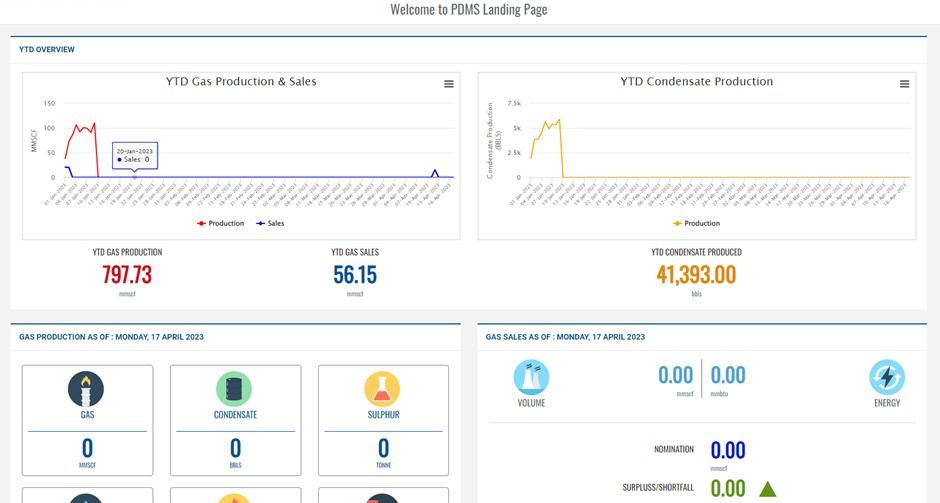
- Multi-Area Dashboard Analytics: Generates dedicated landing interfaces and asset-specific dashboards for the HCML, BD, and 3M areas, projecting intuitive visualizations of gas sales trends, volumetric production totals, and condensate KPIs.
- Dynamic Engineering Visualization (BD Live View): Integrates an advanced process overlay module that blends historical trend components directly onto interactive field-level engineering schematics, presenting real-time operational values with precise process context.
- Automated Report Builder Engine: Features a date-driven document compiler that automatically aggregates field data to generate and export Daily Production Reports, Gas Balance sheets, WHP/FPSO/FPU layouts, and GMS metering logs into standard analytical formats.
- Secure Bulk Ingestion Pipelines: Supports large-scale historical data migration and bulk entry workflows via automated file upload mechanisms that utilize structured Excel templates to enforce absolute data integrity while accelerating input speeds.
- Granular System Governance: Grants system administrators comprehensive control over security settings, role-based boundary assignments, field/well relational mapping, constant calculation variables, and automated email broadcast matrices.
Impact
By unifying the entry, visualization, and synthesis of operational data into a singular ecosystem, PDMS delivers tangible, transformative value to the enterprise without relying on unverified claims:
- Establishment of a Single Source of Truth: All validated production and engineering records are securely anchored in a single, structured database repository.
- Drastic Acceleration of Strategic Cycles: Executive management can view multi-field operational telemetry instantly, reducing the time required to detect, analyze, and mitigate field exceptions.
- Absolute Reporting Consistency: Standardizing the document generation engine across the HCML, BD, and 3M areas completely eliminates formatting discrepancies and slashes manual data reconciliation times.
- Rigorous Data Auditability: Every single transaction and operational record becomes fully traceable through enforced data schemas and precise user role restrictions.
- Optimized Resource Allocation: Transitioning away from disconnected spreadsheets frees field engineers from tedious administrative workloads, allowing them to focus entirely on production optimization and predictive asset maintenance.
Why This Matters for Data-Driven Production Management
In the contemporary landscape of industrial digital transformation, navigating volatile energy markets and intricate supply commitments requires absolute data clarity. Maximizing terminal throughput, balancing buyer nominations, and protecting offshore asset integrity cannot depend on latent, fragmented documentation.
Deploying a centralized infrastructure like PDMS effectively bridges the gap between tactical field execution and corporate macro-planning. Standardized inputs protect data quality at the point of origin, while consolidated analytics empower asset managers to evaluate multi-field operational efficiencies holistically. Most importantly, this platform establishes the foundational data architecture necessary to integrate future enterprise innovations, including advanced machine learning algorithms, cloud-based automated data exchanges, and deep predictive analytics across the industrial footprint.
Supported Product Facts
- Complete Operational Scope: Fully engineered to govern and process data models for Wellhead Platforms (WHP), internal processing facilities, Gas Metering Stations (GMS), Floating Production Units (FPU), and commercial buyer nomination schemes.
- Concurrent Multi-Asset Scalability: Natively architected to support parallel workflows, high concurrent session volumes, and data ingestion from three expansive operational sectors: HCML, BD, and 3M.
- Advanced UI Component Framework: Equipped with rich client-side plotting libraries for trend tracking, vector-based SVG layers for process schematic rendering, and transactional database tables with multi-layered input validation.
- Compliant Document Compilation: Built-in reporting engines are mechanically validated to parse mathematical balances perfectly, generating official compliance outputs such as Daily Production Summaries and Gas Balance sheets.