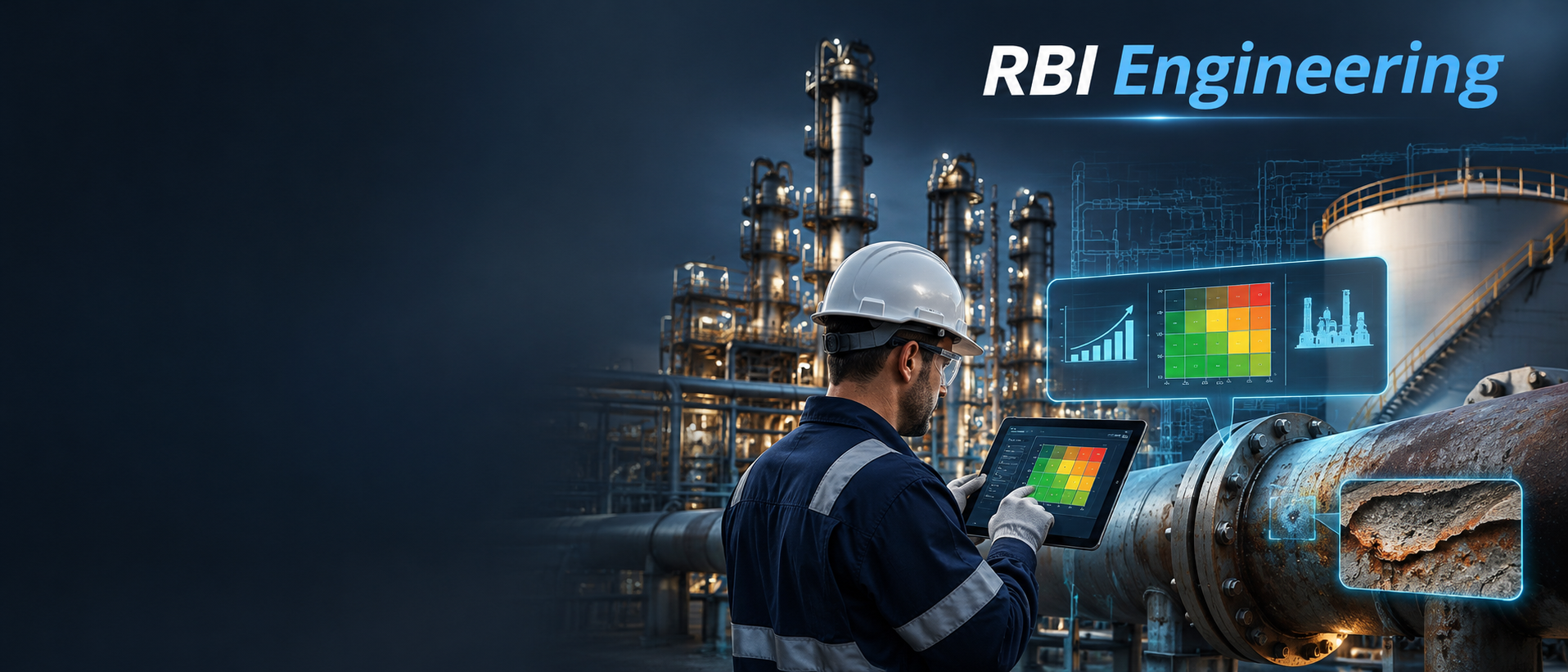
Risk-Based Inspection (RBI) Engineering: Smarter Inspection Planning for Asset Integrity
Inspect Smarter, Not Just More Often
In industrial operations, not every asset carries the same level of risk. Two equipment items may operate in the same facility yet differ significantly in their degradation mechanisms, likelihood of failure, and potential consequences. Applying the same inspection approach to both can overlook critical threats while consuming resources where they add limited value.
Risk-Based Inspection (RBI) provides a structured way to answer a more important question: which assets require attention, what should be inspected, and how should inspection resources be prioritized?
At PT SCADA PRIMA CIPTA (SPC), our RBI Engineering Services translate asset and operating information into risk-informed inspection strategies that support safer, more reliable, and more efficient asset integrity management.
From equipment data to an understanding of risk
Effective RBI begins with a sound technical understanding of the asset. Engineering teams review equipment design and materials, operating conditions, inspection and maintenance history, and available integrity data. This information supports the identification of credible damage mechanisms, such as corrosion, erosion, cracking, or other service-dependent deterioration.
The assessment considers two fundamental dimensions of risk:
- Probability of Failure (PoF): how likely the equipment is to fail under the assessed conditions, considering relevant deterioration and available evidence.
- Consequence of Failure (CoF): the potential impact of a failure on personnel, the environment, operations, and assets, as applicable to the assessment methodology.
By evaluating PoF and CoF together, RBI helps distinguish equipment that requires closer attention from equipment with lower assessed risk. The result is a defensible basis for inspection prioritization rather than a uniform, calendar-driven approach.
Engineering an inspection strategy that fits the risk
Risk ranking is not the final deliverable. The real value of RBI comes from turning assessment findings into a practical inspection plan: identifying priority locations, selecting suitable examination methods, defining appropriate coverage, and recommending inspection intervals in line with the applicable methodology, risk criteria, and regulatory requirements.
Inspection improves knowledge of equipment condition and reduces uncertainty; it does not, by itself, eliminate a damage mechanism. Where risk remains unacceptable, additional controls—such as operating changes, repairs, replacement, or other mitigation measures—may also be required.
What SPC RBI Engineering Services deliver
- Asset data review, validation, and identification of relevant damage mechanisms.
- PoF and CoF assessment to establish an informed risk profile.
- Risk ranking and prioritization of critical equipment and components.
- Risk-informed recommendations on inspection methods, coverage, and intervals.
- Actionable inspection strategies, work packs, and engineering recommendations to support implementation and periodic reassessment.
Better decisions for long-term asset integrity
A well-structured RBI program enables inspection resources to be directed toward the areas where they can provide the greatest value. It supports more transparent maintenance and inspection decisions, improves visibility of integrity threats, and helps organizations balance safety, reliability, and operational priorities.
At SPC, the objective is not simply to inspect more often. It is to use engineering evidence to inspect more effectively—where it matters most.

From RBI engineering to digital inspection planning
Coming next — Part 2: PROMIA RBI Software. Explore how SPC brings RBI engineering results into a digital workflow to support more connected, consistent, and actionable inspection planning.
Ready to review your inspection priorities? Discuss your RBI engineering requirements with the SPC team.