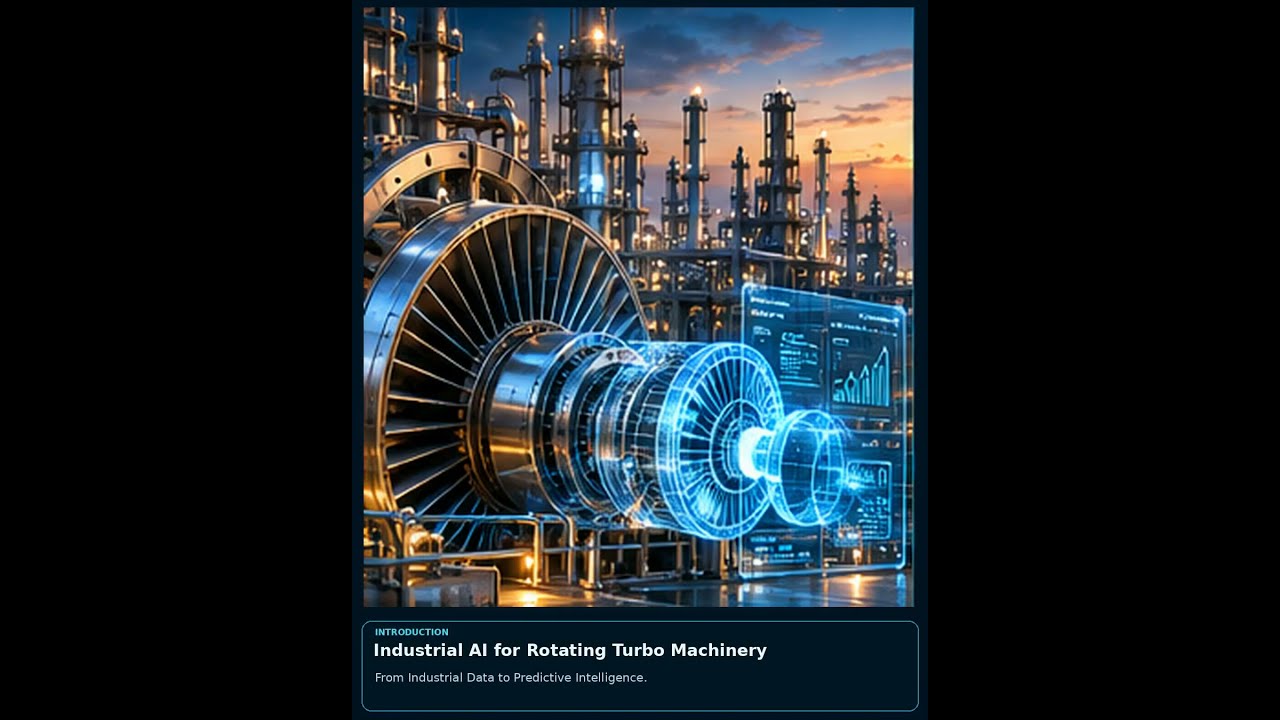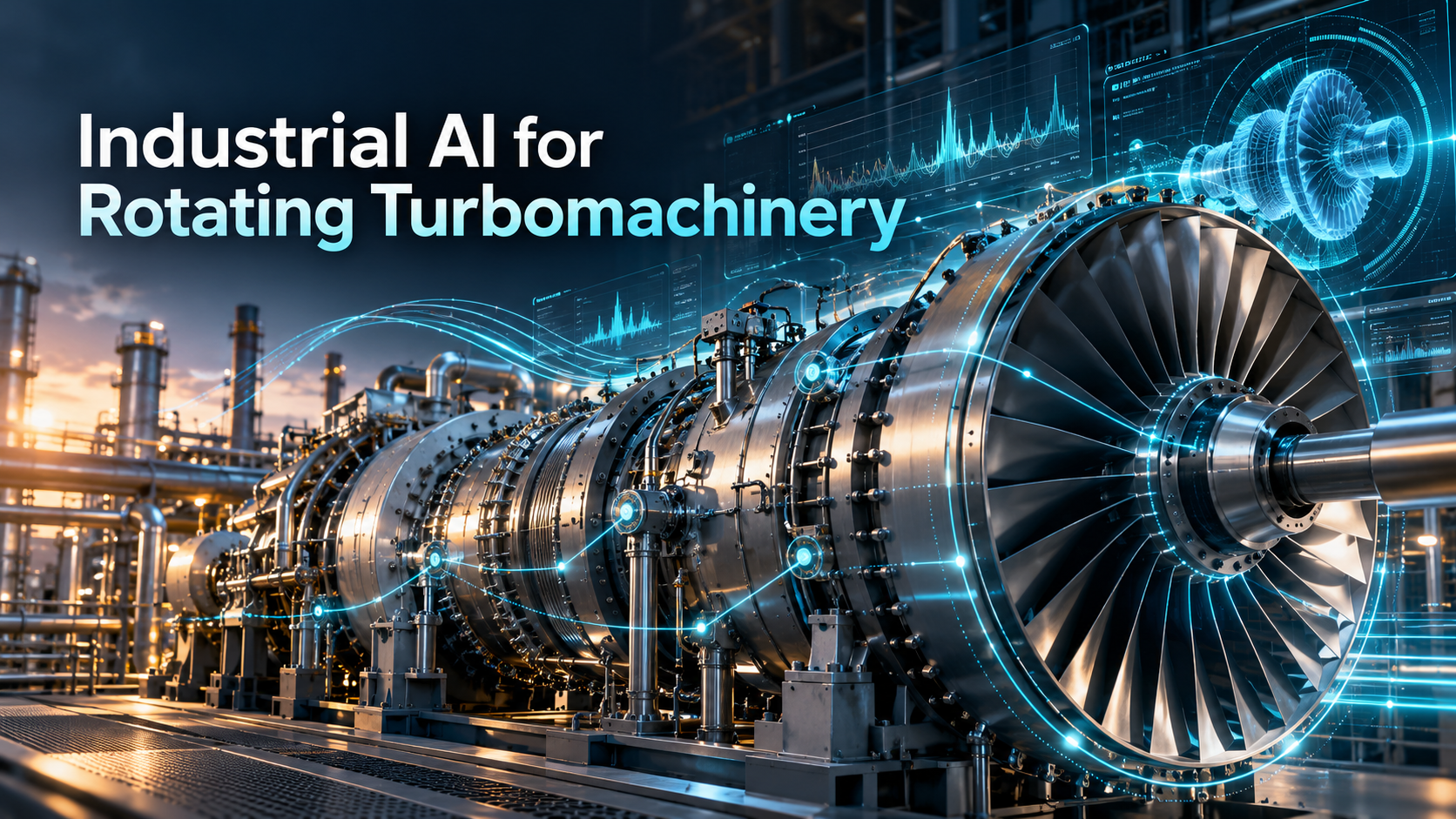
Industrial AI for Rotating Turbomachinery: From Plant Data to Predictive Intelligence in 5 Steps
Gas turbines, centrifugal compressors and the gearboxes between them are the heart of many gas processing, power and petrochemical plants. When one of them trips unexpectedly, the cost goes far beyond the repair bill: lost production, flaring, missed delivery commitments and a rush for spare parts.
The good news is that these machines rarely fail without warning. Bearing vibration creeps upward, lube oil temperature drifts and seal gas behaviour changes, often weeks before any alarm limit is reached. In most plants, that evidence is already stored in the historian. The real challenge is turning it into an early, trustworthy signal and putting that signal in front of the people who can act on it.
That is exactly what Industrial AI is for. In our latest short video, we walk through the five-step lifecycle SPC uses to take rotating turbomachinery from industrial data to predictive intelligence.
Key Take A ways
- Start with reliability objectives, not algorithms: detect anomalies early, forecast time to failure and plan maintenance proactively.
- Keep the control network safe: analytics read from a historian in the industrial DMZ, never directly from PLCs or DCS.
- Give data context: AVEVA PI Server and PI Asset Framework organise every tag by machine and subsystem.
- Build trust: Python models are designed with subject-matter experts and backtested against real history.
- Close the loop: results appear in PI Vision and feed straight into alerts, engineering review and maintenance action.
Why fixed alarm limits are not enough
Traditional alarms are designed to protect the machine, not to predict its behaviour. By the time a high-vibration alarm trips, the window for planning a repair has already narrowed. Machine learning takes a different approach: it learns how each machine normally behaves across its real operating conditions, such as load, speed and ambient temperature, and highlights deviations long before a hard limit is reached. The result is more time to investigate, plan and act.
The 5-step Industrial AI lifecycle
Step 1: Business objectives
Every successful Industrial AI project starts with a clear question. For rotating equipment, we frame it around three reliability objectives:
- Early anomaly detection: spot abnormal behaviour while it is still small.
- Forecast time to failure: estimate how a trend is likely to develop so work can be scheduled.
- Proactive maintenance: move from reacting to trips to planning interventions.
Agreeing on these objectives up front decides which machines, which failure modes and which data matter most, and how success will be measured.
Step 2: OT cybersecurity
Analytics need data, but the control network must never be exposed to get it. In the architecture shown in the video, the OT network (PLC and DCS) sends data up to a historian in the industrial DMZ, which acts as the single source of truth. A firewall separates that zone from the IT network, where the analytics run.
Models read from the historian, not from the controllers. This layered approach follows well-established OT zoning practice, in line with the Purdue model and IEC 62443 principles, so the plant gains insight without adding risk to operations.
Step 3: Data engineering
Raw sensor readings for vibration, temperature, pressure and flow are collected in AVEVA PI Server, the industrial historian. They are then structured in PI Asset Framework (PI AF), which groups every tag by machine and subsystem: lube oil, gas turbine seal gas, performance, mechanical and combustion, gearbox, and centrifugal compressor performance and mechanical.
This context is what makes analytics scalable. A model does not just see “a vibration tag”; it knows which bearing on which machine train that tag belongs to. With consistent templates, the same approach can be rolled out across multiple trains and sites.
Step 4: Python machine learning and validation
With clean, contextualised data in place, Python models take on two complementary tasks: anomaly detection, which flags behaviour that does not match the machine’s normal pattern, and forecasting, which projects where a signal is heading.
Domain knowledge is built in from the start. Subject-matter experts help select the right predictors, the training period and the most suitable model. Each model is then trained, backtested and validated. The video shows an example of actual versus forecast bearing vibration on the 2X/2Y probes, with an anomaly clearly flagged above the forecast band.
“A model only creates value if engineers trust it. Backtesting against real plant history is how that trust is earned.”
Step 5: Deployment and action
Insight only matters if it reaches the right people at the right time. Model results are written from Python to Microsoft SQL Server, linked to the right equipment through PI AF, and displayed in PI Vision next to the actual process data. Engineers see predictions in the same tools they already use every day.
From there, the results connect to the maintenance workflow: an alert or notification is raised, engineers review the evidence, and the maintenance team takes planned action.
Continuous improvement: a lifecycle, not a one-off project
Machines are overhauled, operating envelopes shift and new failure modes appear. That is why the five steps form a loop rather than a straight line: monitor, learn, improve. The approach follows the iterative CRISP-DM methodology, so every maintenance outcome feeds back into better objectives, better data and better models.
The business value of predictive intelligence
When the lifecycle is in place, the benefits reach well beyond the control room:
- Higher reliability: earlier visibility of developing problems.
- Reduced downtime: fewer unplanned trips and shorter outages.
- Optimised performance: machines kept running closer to their best operating point.
- Lower maintenance cost: work is planned, parts are ready and crews are scheduled.
- More sustainable operations: fewer unplanned trips and restarts can mean less flaring and wasted energy.
Why work with SPC
PT Scada Prima Cipta (SPC) is an AVEVA and Schneider Electric system integrator partner based in Bandung, Indonesia. We work across PI System implementation, OT network architecture and process analytics for oil and gas, geothermal, power and manufacturing clients across Indonesia.
This means one team can support the whole lifecycle, from historian and industrial DMZ design to PI AF modelling, Python analytics and PI Vision displays, so your Industrial AI initiative is built on a secure, well-structured foundation from day one.
Frequently asked questions
What is Industrial AI for turbomachinery?
It is the use of machine learning on operational data, such as vibration, temperature, pressure and flow, to detect abnormal behaviour early and forecast how gas turbines, compressors and gearboxes are likely to perform, so maintenance can be planned before a failure occurs.
Do we need to replace our existing historian?
No. The approach is built on AVEVA PI Server and PI Asset Framework. If your plant already runs the PI System, much of the data foundation is in place; the work focuses on structuring assets, building models and connecting results back to your engineers.
How is the control network protected?
Analytics read data from a historian located in the industrial DMZ, separated from the IT network by a firewall. Models never connect directly to PLCs or the DCS.
Where do engineers see the results?
Predictions and anomaly flags are displayed in PI Vision alongside actual process data, and they can trigger alerts that feed into the existing maintenance workflow.
Ready to turn your turbomachinery data into predictive intelligence?
Talk to SPC about an Industrial AI assessment for your rotating equipment.